
"From Mercedes, Joaquín Labella co-founded The Land Group, a land investment platform that already manages US$130 million and more than 40,000 hectares across Uruguay and Paraguay, with ongoing expansion into Europe and Brazil.
The model is aimed at high-net-worth investors seeking refuge in real assets with a long-term focus. With a growing presence in markets such as Portugal, Spain and Brazil, the firm stands out for its transparent structure and non-discretionary mandates, where investors retain full control over their assets.
In an uncertain global context, productive land is gaining prominence as a strategic asset, driven by factors such as sustainability, access to water, and the institutional stability of countries like Uruguay."
⬇️ Continue reading bellow ⬇️

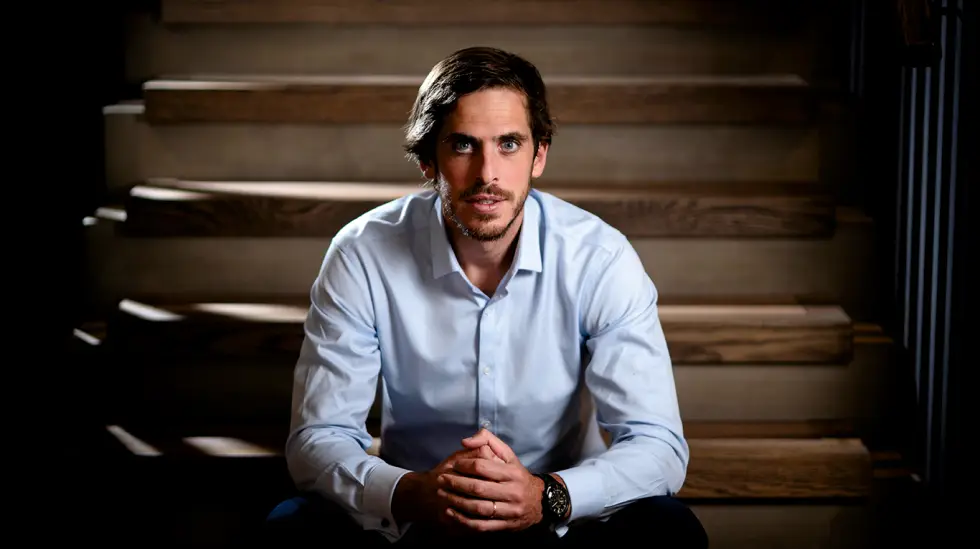

With a focus on transparency and the long term, The Land Group manages 40,000 hectares across Uruguay and Paraguay, and is expanding into Portugal, Spain and Brazil, in a market increasingly seeking refuge in real assets.
From Europe, but with a permanent link to Uruguay, Joaquín Labella has built, in less than a decade, an investment platform in real assets that today manages approximately US$130 million in agricultural, livestock and forestry land across South America and Europe. Together with Swiss partner Francisco Roque de Pinho, he co-founded The Land Group in 2016, a firm specialised in structuring, managing and operating agricultural investments for family offices and high-net-worth investors.
Unlike traditional funds, the company operates under non-discretionary mandates, with a strong focus on transparency and alignment with the investor.
The firm currently manages more than 40,000 hectares across Uruguay and Paraguay, with a presence in Portugal and advanced plans to expand into Spain and Brazil. He spoke with Forbes Uruguay about the business model and his view on the country.
Which countries do you currently operate in, and at what scale?
"We currently manage around 20,000 hectares in Uruguay and another 20,000 in Paraguay. We are in the process of acquiring our first farms in Portugal and already have advanced discussions to expand into Spain and Brazil this year."
What type of investors do you work with?
"Primarily family offices and high-net-worth individuals. Historically, we have worked extensively with investors from the United States and Europe, but in recent years we have seen growing interest from Brazilian investors.
We cover the full investment cycle, from identifying opportunities to management, production and administration, through to exit. We act as a trusted partner, as there is a cultural barrier, a different time zone, a distance of 10,000 kilometres and a 12-hour flight. As such, investors entrust us with the management of their assets."
What is The Land Group’s business model?
"We are not a fund. We operate under non-discretionary mandates. Investors define the business plan and risk appetite, and we execute it strictly. The asset always remains the investor’s property; they receive monthly reporting and have access to the bank account.
It is fundamentally a mandate based on trust and full transparency, where investors remain the ultimate owners of both their assets and their decisions. If they are not satisfied with our service, they can terminate the relationship without prior notice."
Do you have a minimum return target for land investments?
"As a matter of policy, we never promise returns. We are well aware of the volatility in commodity prices, livestock prices and climate conditions. Under full transparency, we agree on the business plan together, but we do not commit to a specific return, as this can lead to misaligned expectations."
In the case of Uruguay, how are productive activities distributed?
"We manage seven farms across six departments. Initially, 100% of the area was leased out, but over time we have taken on greater operational risk. Today, we directly operate all livestock activities, covering around 14,000 hectares. We manage approximately 2,000 hectares in agriculture, with the remainder allocated to forestry."
Soil stewardship appears to be a central pillar of the model.
"Absolutely. Around 85% of the assets we manage are tied to the soil. Beyond the results of each season, our objective is for farms to become more resilient, fertile and valuable over the long term.
We apply strict rotations between crops and pastures, even when agricultural prices are high. Our clients prioritise long-term asset appreciation over annual returns."
What role does irrigation play in investment decisions?
"It is key. Where water availability exists, we invest in irrigation. We believe that, today, investing in irrigation is more profitable than acquiring additional land, as it enables a step change in productivity while reducing climate risk.
Uruguay also has a significant comparative advantage in terms of water availability, beyond its fiscal benefits. Our policy with investors is to reinvest: around 90% of farm dividends are reinvested into infrastructure, such as irrigation. We have underground water distribution systems across 100% of the farms we operate."
Where does your story begin, and what was your background before entering the agricultural investment space?
"I was born and raised in Mercedes, Soriano, where I completed both primary and secondary school. It is a city closely linked to the agricultural sector, although my family was not directly involved in farming.
Even so, I always had a close connection: my grandfather was one of the pioneers of beekeeping in Uruguay and the country’s first honey exporter. He is now 92 years old.
My professional path took a different direction. I studied to become a chartered accountant and later completed a master’s degree in finance. My goal was always to work in that field. I never imagined I would end up professionally involved in agriculture."
How did The Land Group come about, and how did the partnership with your co-founder begin?
"At 25, I moved to London for a professional opportunity. I worked at an investment holding company focused on real assets in Latin America. My partner, Francisco Roque de Pinho, who is Swiss, was my boss at the time. Over time, we decided to branch out and launch our own project. In 2016, we founded The Land Group.
At the beginning, the focus was on supporting individuals who had already invested in the region, helping to better manage those assets and, in some cases, recover them. Today, I can say I have a dream job, as I essentially combine finance, my passion, and what I studied with engaging with sophisticated investors at the highest level. At the same time, I spend time with teams on the ground across different farms, both in South America and Europe. For me, it is the perfect balance."
In the current context, is Uruguay still attractive to foreign investors?
"Yes, although we do see some warning signs in terms of competitiveness. The country cost is high and, in some cases, profitability is heavily supported by price levels. That said, Uruguay offers institutional stability, clear rules and predictability, which in the current geopolitical context are highly valued assets. Our investors take a long-term view, typically over ten to twenty years.
We must continue positioning ourselves as producers of high-value, grass-fed beef without deforestation, without the use of hormones or antibiotics and work to open more markets. The goal is to give Uruguayan producers more options, ensuring that pricing is not merely circumstantial."
From Europe, how do you view the Mercosur–European Union agreement?
"I see it as very positive news. Any form of trade liberalisation is beneficial. As I mentioned, Uruguay should focus on opening markets and positioning itself, particularly in livestock production, with attributes such as grass-fed beef, traceability and sustainability."
Do you have plans to return?
"I previously lived in London and currently reside in Lisbon. I am married to an Argentine, have two Portuguese children, and travel to South America for around ten days each month. The intention is to relocate back to Uruguay in the medium term. Family roots carry weight, and we believe it is a great place for our children to grow up."
-> Joaquin Labella - Co-founder of The Land Group
Article written by Forbes Uruguay.