Rethinking the Montado: Trees as infrastructure
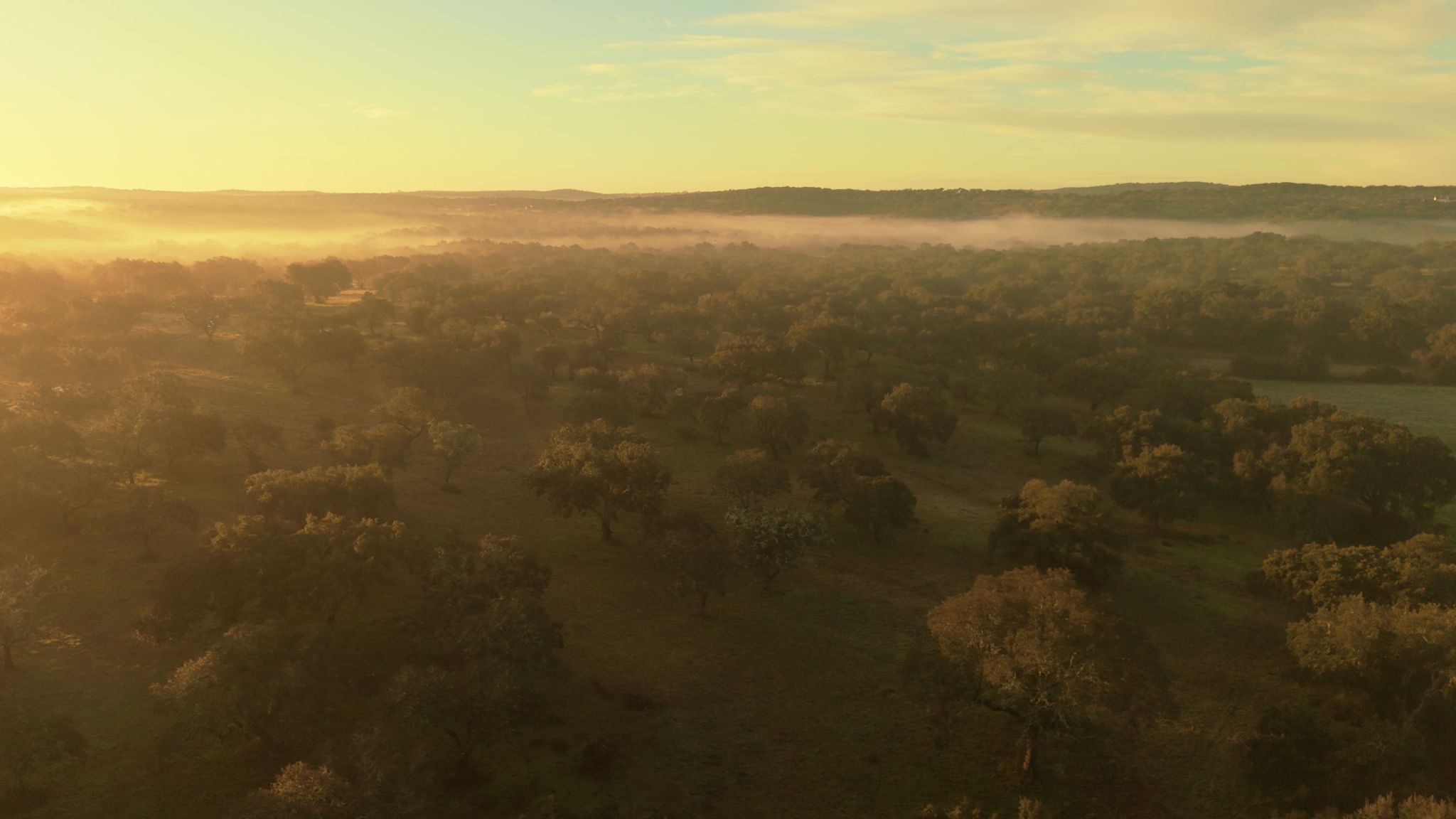
The Montado, a 12,000-year-old living agroforestry system of global ecological value, evolved to manage rainfall variability through the integration of trees, grasses, and livestock. But decades of passive management, among other factors, have led to the decline of tree density, ageing stands, and limited species diversity, eroding many of its ecological and economic strengths.
Today, sparse canopies and degraded understorey dominate much of the Alentejo. These conditions increase evaporation, weaken soil structure, and reduce the system’s ability to buffer drought and heat extremes.
Strategically increasing tree density represents one of the most effective levers for improving water management, as trees moderate microclimate, reduce wind speed, intercept intense rainfall, and stabilise slopes. Together, these functions are responsible for supporting infiltration and limiting runoff.
Even where cork or holm oak alone prove insufficient (and in some cases incapable), integrating other multipurpose species for fodder, timber, biomass, or shelter, rebuilds a layered system that captures more water and uses it more efficiently through summer.
In a region facing an increasing risk of desertification, farmers and land managers must treat trees less as ornamental features or direct revenue providers and more as essential infrastructure.
Combined with The Land Group´s Precision Grazing and soil-health-focused regenerative management, a denser and more diverse Montado turns seasonal water excess into the foundation of long-term farmland resilience.
Together we cultivate sustainable growth 🌳
Written by Gonçalo Pereira Miguel
Agronomist, The Land Group